
How do you choose the right ceiling light? Hao Dongjia tells you.

How do you choose the right ceiling light? Hao Dongjia tells you.

When selecting lighting for home renovations, flush-mount ceiling lights have become the mainstream choice for living rooms, bedrooms, studies, kitchens, and bathrooms, thanks to their ease of installation, space-saving profile, and soft illumination. However, the market offers a vast array of styles with widely varying materials, light sources, sizes, and functions. Many homeowners, renovation firms, and project procurement clients struggle with the selection process, often encountering issues such as harsh glare, incorrect sizing, or premature problems like flickering and yellowing. Based in Henglan Town, Zhongshan—adjacent to Guzhen, China’s “Lighting Capital”—Haodongjia Lighting & Electrical Co., Ltd. draws on years of experience in lighting R&D and manufacturing. Here, we offer a guide on how to select the right ceiling light.

I. Check the light source: prioritize light sources that are flicker-free and have a high color rendering index (CRI).

The light source is the core component of a ceiling light and directly impacts eye health. When purchasing, prioritize features such as flicker-free performance and a high Color Rendering Index (CRI/Ra). High-CRI lights accurately render colors—ensuring that home furnishings and clothing appear true to life—making them ideal for living rooms and studies.

Opt for models with three-color dimming capabilities, allowing you to switch between cool white, neutral, and warm light. Neutral light is suitable for daily chores, office work, and reading; warm light creates a soft, cozy atmosphere perfect for winding down before bed; and cool white light offers high brightness, making it ideal for cleaning or entertaining guests. For humid areas like bathrooms and kitchens, select moisture-resistant and waterproof ceiling lights to prevent moisture from damaging the power driver and to extend the fixture’s lifespan.
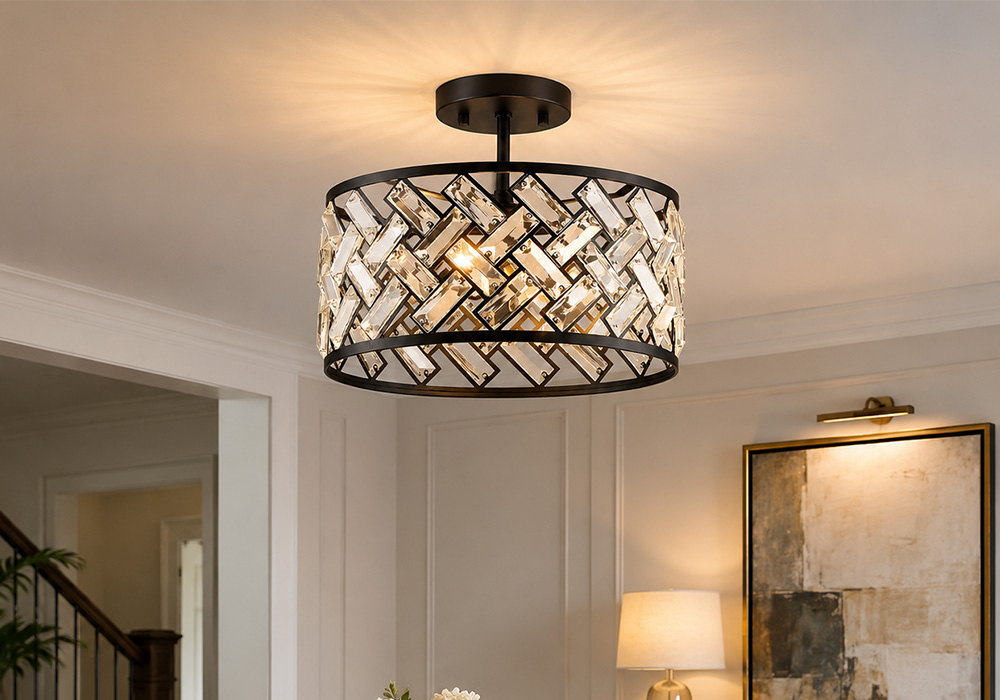
II. Determine the size and wattage of the ceiling light based on the room size.

The size of the ceiling light should match the room’s area; a light that is too small provides insufficient brightness, while one that is too large can make the space feel oppressive.

– Bedrooms under 10 m²: Diameter of 30–40 cm, power around 24W;
– Bedrooms 10–15 m²: Diameter of 40–50 cm, power around 36W;
– Living rooms 20–30 m²: Diameter of 50–60 cm, power 72–96W.
For homes with low ceilings, ultra-slim ceiling lights are the best choice, as they do not visually lower the ceiling height. For large living rooms, a combination of multiple lights can also be used to ensure more even light distribution.

III. Diffuser material determines light transmission and durability.

Ceiling light diffusers on the market are commonly made of acrylic or polycarbonate (PC). High-quality acrylic offers uniform light transmission, producing a soft, glare-free glow; it is also resistant to aging and does not easily yellow over time. In contrast, inferior diffusers have poor light transmission and quickly yellow or darken after use, significantly reducing brightness.

When selecting a light, examine the diffuser: a high-quality one features a smooth, refined surface free of burrs or black specks, and provides even light transmission without bright spots or dark patches.
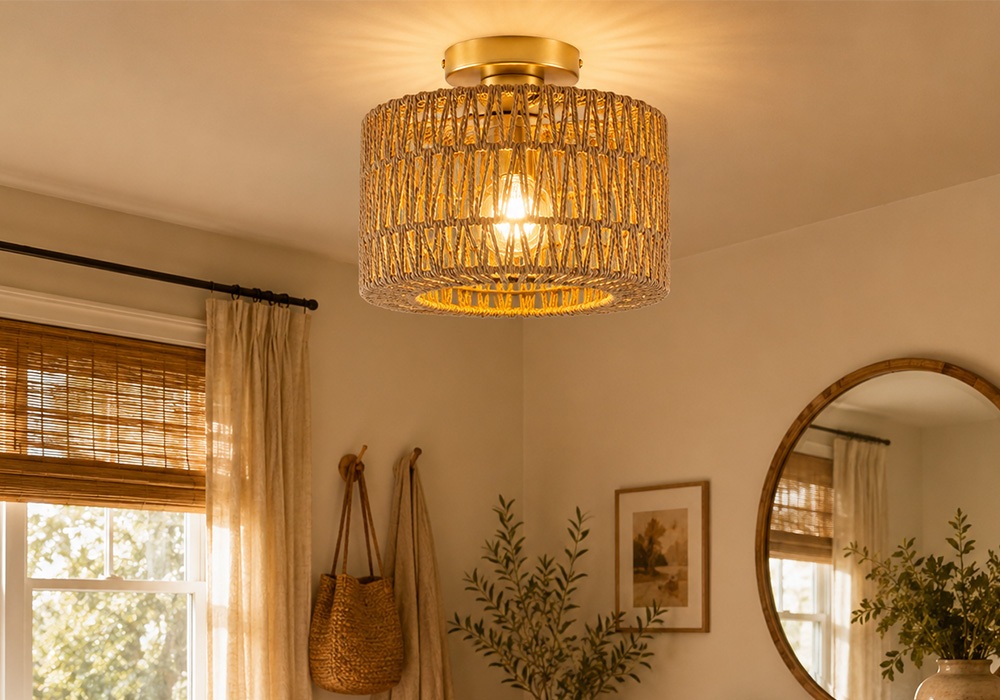
IV. Style and Design: Matching the Overall Home Interior

Flush-mount ceiling lights come in a wide variety of styles—including minimalist, Nordic, Neo-Chinese, and “light luxury”—so it is important to select a design that complements the overall interior décor. For minimalist interiors, opt for flat, clean-lined fixtures; for light luxury settings, consider lights featuring crystal or metal accents; and for Neo-Chinese interiors, choose fixtures that incorporate wood elements.

For commercial projects—such as bulk purchases for offices, retail shops, or apartment complexes—prioritize minimalist, low-maintenance designs to facilitate future servicing and replacement.

V. Chassis and Drive Power Supply: Hidden Keys to Quality

Many people focus solely on appearance, overlooking the chassis and the LED driver. High-quality ceiling lights feature a chassis made of thickened cold-rolled steel, ensuring flatness, structural stability, and safer installation. The driver acts as the “heart” of the light fixture; a high-quality driver provides stable power, minimizes flickering, reduces the risk of failure, and extends the fixture’s lifespan.
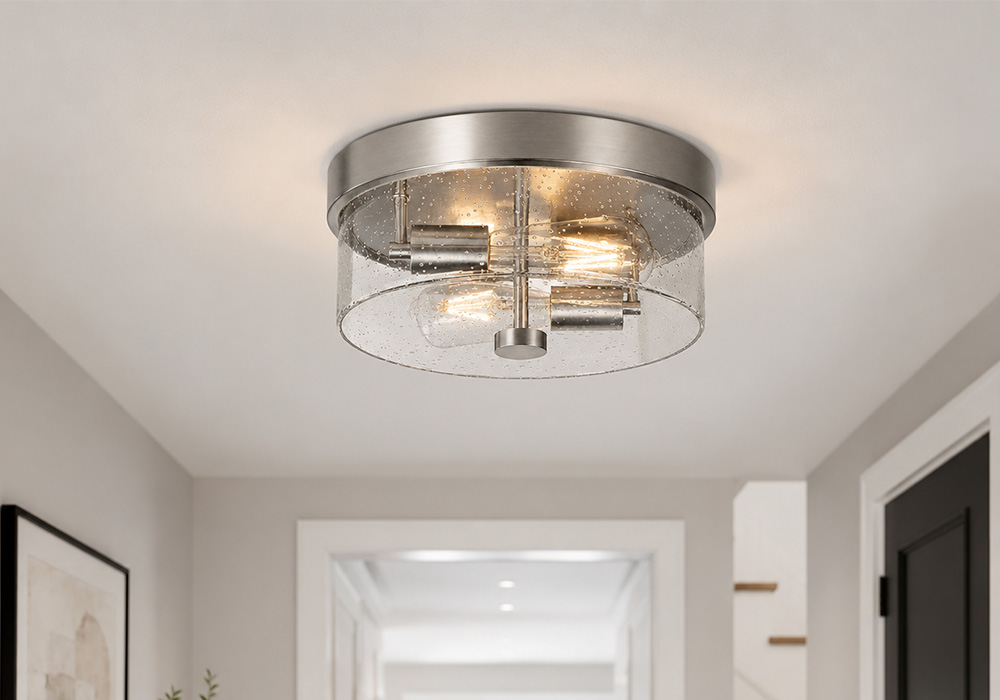
VI. Procurement Channels: For home renovation retail and bulk project procurement, look to the source factory.

For individual home renovation purchases, beyond aesthetics, it is crucial to verify the warranty period. For bulk procurement—such as for renovation companies, real estate projects, or apartment hotels—it is recommended to deal directly with the original lighting manufacturer; this allows for custom specifications, reliable delivery, and better quality control.

When selecting a ceiling light, do not focus solely on appearance and price; five key elements are essential: the light source, dimensions, diffuser, base, and driver. Leveraging the advantages of the Zhongshan lighting industry supply chain, Haodongjia Lighting & Electrical Co., Ltd. specializes in the R&D and manufacturing of home lighting and hardware-based lighting fixtures. We offer a comprehensive range of styles—including ceiling lights, wall lamps, and pendant lights—and provide bulk supply services for residential renovations, commercial shops, hotels, and apartment projects, delivering stable, reliable lighting products and integrated solutions to our customers.